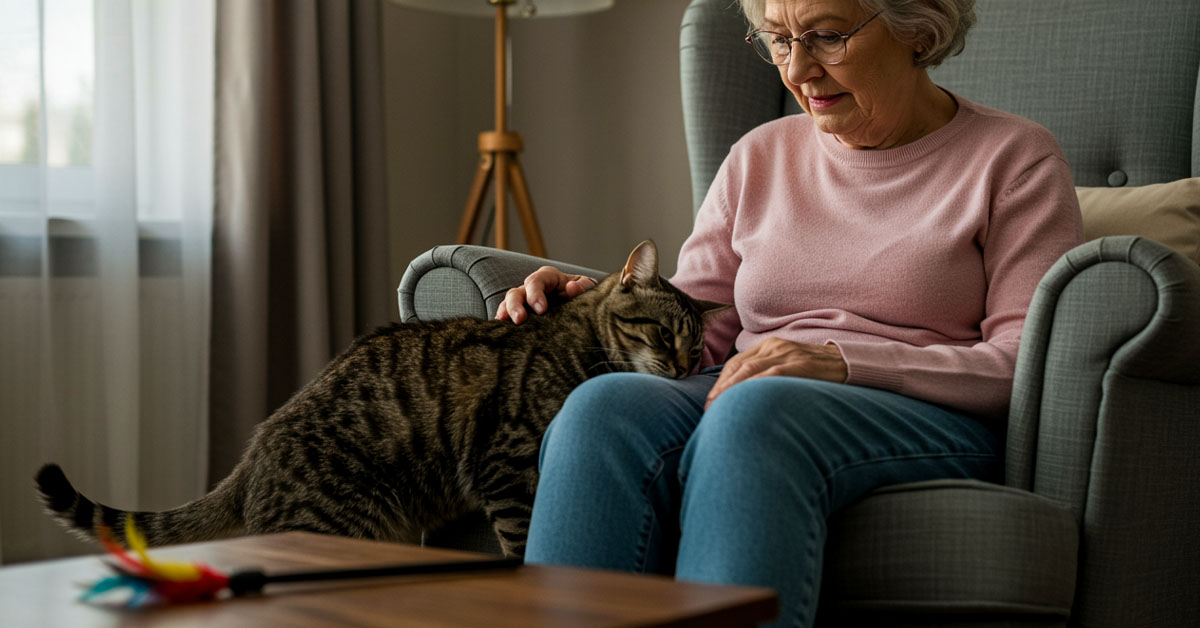
There's a moment that sneaks up on every cat owner past a certain age. It's not dramatic. Nobody talks about it. But one afternoon, your cat drops a crumpled ball at your feet, looks up with those wide expectant eyes — and you realize that getting down on the floor to play is going to hurt. Maybe it's your knees. Maybe it's your back. Maybe it's just that heavy tiredness that settles into your arms after five minutes of waving a feather wand that used to feel like nothing.
The cat doesn't understand any of that. All she knows is that the game got shorter. Then it stopped altogether.
That slow, quiet guilt — the feeling that you're letting down the one creature that depends on you most — is something millions of senior cat owners carry every single day. And almost none of them talk about it.
The Problem Nobody Warns You About When You Age With a Cat
Cats don't retire when their owners do. A ten-year-old indoor cat still has the wiring of a predator. The instinct to stalk, chase, and pounce doesn't fade just because the household has gotten quieter. What changes is the outlet.
When play dries up, cats don't just sit there peacefully. They get restless. They gain weight. They start scratching furniture or yowling at odd hours. Some develop anxiety behaviors that look baffling until you realize the root cause is simple: they're bored out of their minds, and nobody's giving them a reason to move.
Veterinarians see it constantly — the overweight indoor cat whose owner loves them deeply but physically can't provide the 20 to 30 minutes of active play a cat needs each day. The advice is always the same: more interactive play. But no one ever explains how to do that when your hands ache and your energy runs out by noon.
It's a gap in the conversation that leaves a lot of caring people feeling like they've failed.
"I Tried Everything on the Pet Store Shelf. She Ignored All of It."
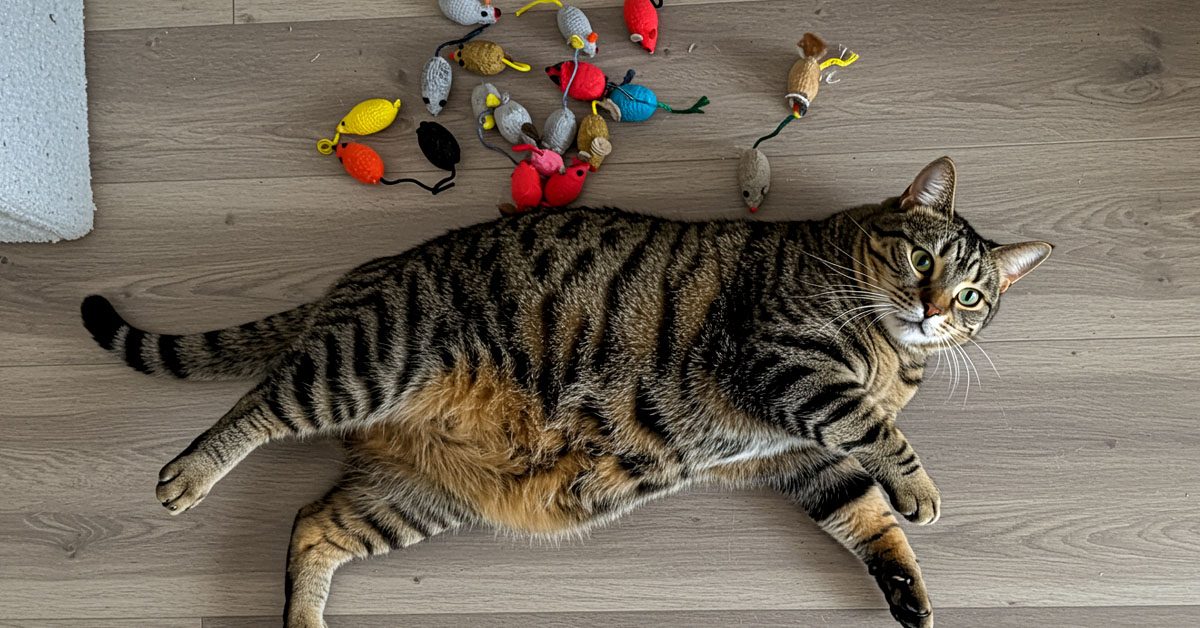
Margaret, 71, from Wisconsin, spent the better part of a year cycling through every automated cat toy she could find. Battery-operated mice that scooted across the floor. Laser pointers on timers. Balls that rolled around inside plastic tracks.
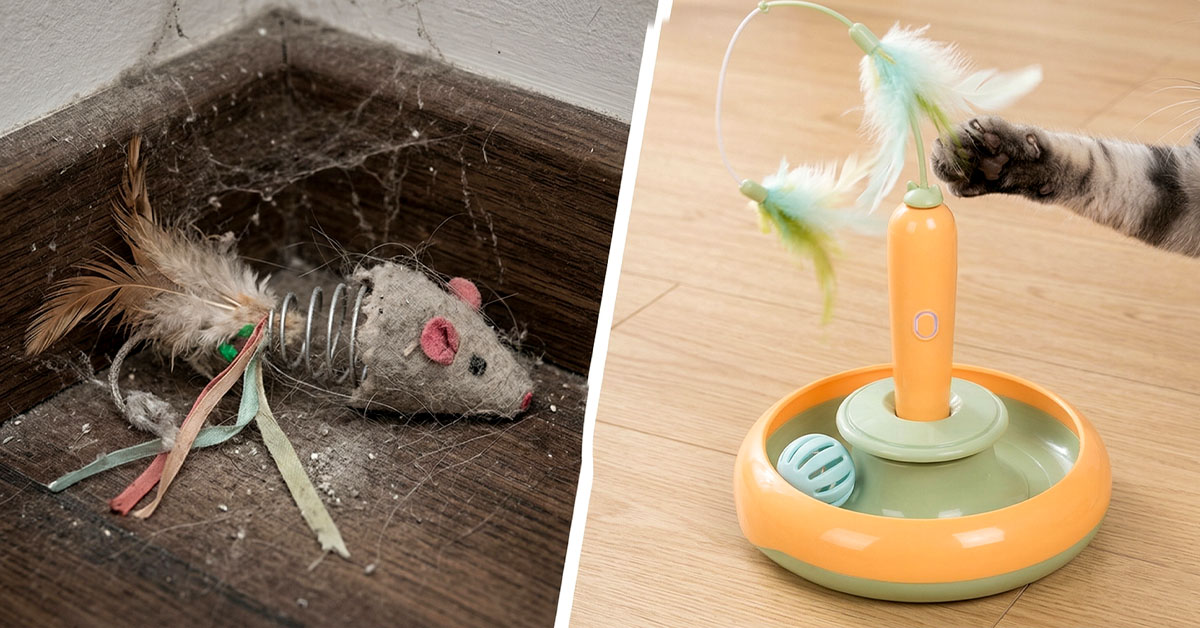
Her cat, Posey, would investigate each one for about forty-five minutes. Then it became furniture.
"I had a drawer full of things she wouldn't touch," Margaret says. "And every time I bought something new, I'd think — maybe this one. Maybe this is the one that actually keeps her attention. It never was."
The issue wasn't the toys themselves. It was the pattern. Every one of them moved in a way that was predictable enough for a cat to lose interest once the novelty wore off. Cats are wired to respond to the unexpected — the way a real mouse changes direction, the way a bird darts sideways. A toy that does the same loop every time is about as stimulating as watching a screensaver.
Margaret didn't know that at the time. She just knew Posey was getting heavier, sleeping more, and had stopped greeting her at the door in the mornings.
What Actually Triggers a Cat's Brain to Stay Engaged
There's a reason cats can stare at a window for an hour watching a single bird. It's not the bird itself — it's the fact that the bird could do anything at any second. Dart left. Hop forward. Disappear entirely. That unpredictability is what locks a cat's attention into place and keeps it there.
Animal behaviorists call it the "variable reward" response. The brain releases a small hit of satisfaction every time something unexpected happens. It's the same mechanism that makes a cat go absolutely wild chasing a piece of string you're dragging by hand — because your hand never moves the same way twice.
The challenge has always been replicating that without a human on the other end of the string.
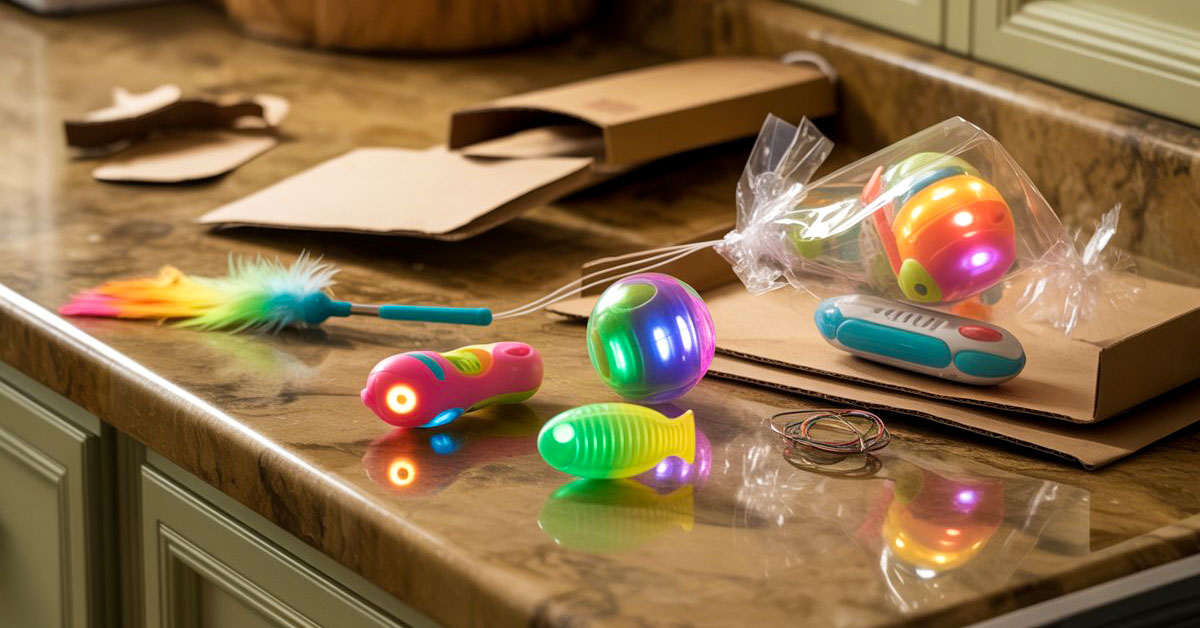
Most automated toys fail at exactly this point. They spin at a constant speed or follow a fixed track. A cat figures out the rhythm in under an hour and walks away. What's needed is a toy that moves the way a real creature moves — erratically, unpredictably, in patterns that never quite repeat.
That principle is exactly what led to the design behind a product called WhirlPaw.
How WhirlPaw Solved the One Problem Other Toys Couldn't
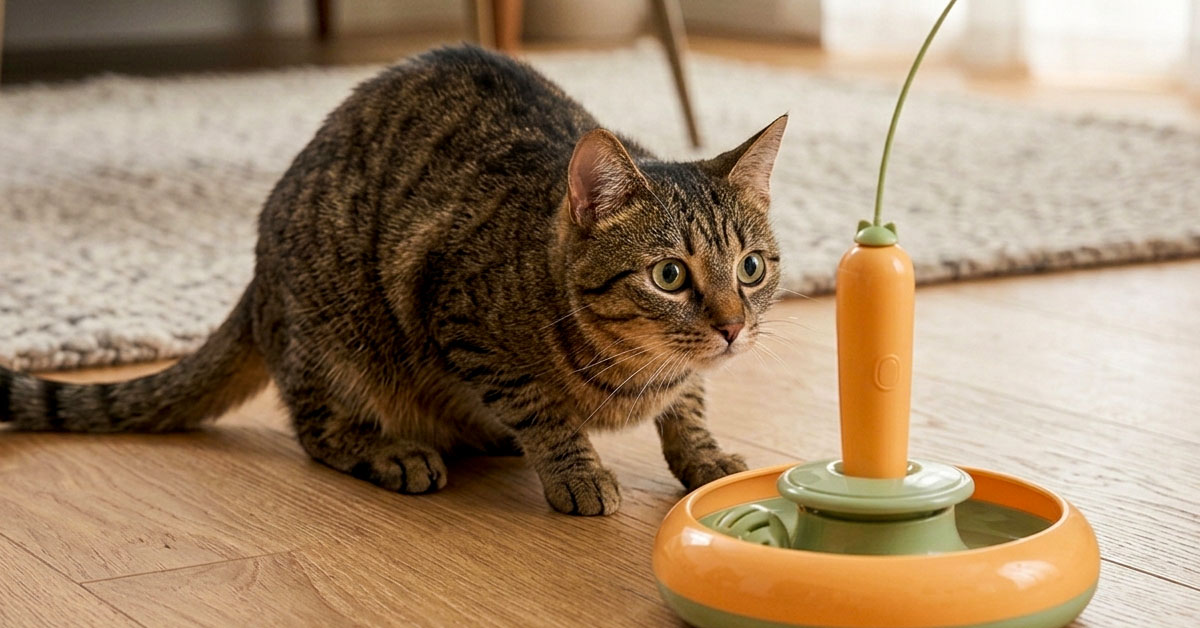
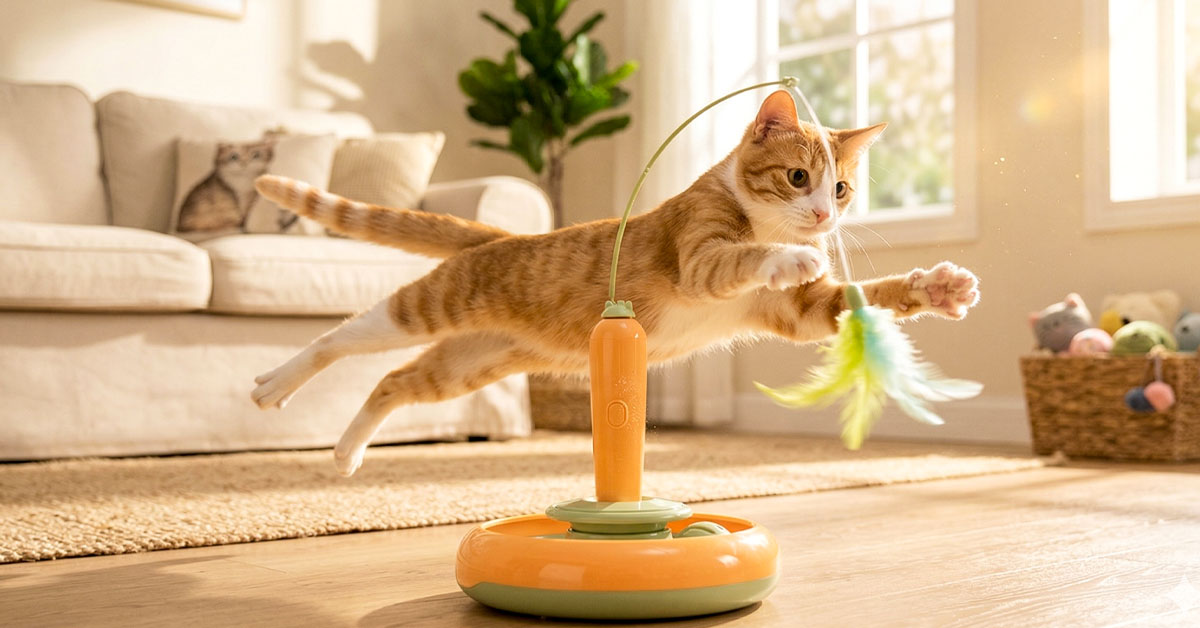
WhirlPaw doesn't look like much at first glance. A compact round base with a feather attachment on a flexible stalk. But the difference is in how it moves.
Instead of spinning at a fixed speed in a fixed direction, it changes pace and pattern constantly. The feather dips, swings wide, reverses, pauses — then darts off again just when a cat thinks it's figured out the rhythm. That randomness is what makes the difference between a toy that ends up in the junk drawer and one that a cat keeps coming back to day after day.
The base is designed with thick, rounded edges so there's nothing sharp for paws to catch on during those moments of full-speed swatting. The motor runs quietly enough that it disappears into the background — no buzzing or whirring that would bother a light sleeper or drown out a phone call. And the feather attachment is replaceable, which means the base unit outlasts the part that takes the most punishment.
For someone like Margaret, the appeal wasn't the engineering. It was the result.
"I turned it on before my morning coffee. By the time I sat down, Posey was already crouched next to it doing that little butt wiggle she hadn't done in years. I almost cried."
The Change That Happens When a Cat Gets Its Spark Back
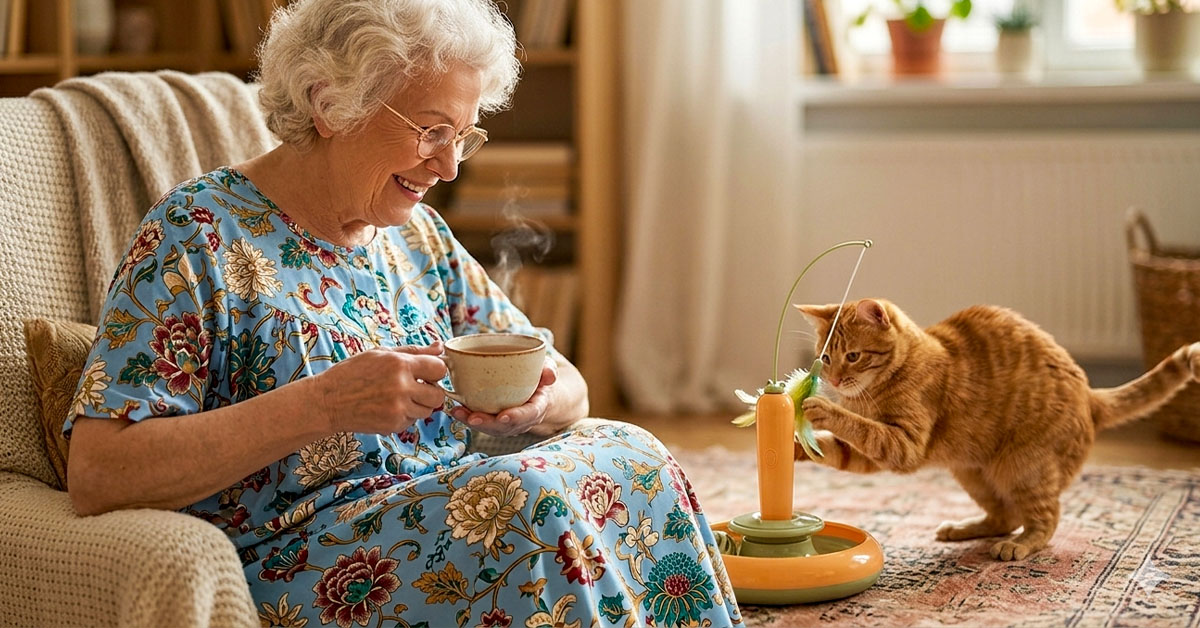
Within the first two weeks, Margaret noticed things shifting. Posey was moving more during the day. She stopped scratching the side of the couch — a habit that had gotten worse over the past year. Her appetite regulated. She started sleeping more soundly at night instead of pacing the hallway at 2 AM.
But the part Margaret didn't expect was what it did for her own mood.
"When your cat is miserable, you feel it. You might not name it, but it sits on you. And when you see them playing — really playing, like they used to — something lifts. I started looking forward to turning it on in the morning just to watch her."
That connection between a cat's wellbeing and an owner's emotional state is better documented than most people realize. Studies have consistently shown that watching a pet play activates the same reward centers in the brain that social bonding does. When the cat is engaged and happy, the owner feels it. When the cat is withdrawn and lethargic, the owner absorbs that too — often without recognizing why their own mood has dipped.
WhirlPaw didn't just give Posey something to chase. It gave Margaret something to enjoy watching. And it took the guilt off her shoulders for the first time in over a year.
What Makes This Different From the Dozen Toys Already Gathering Dust
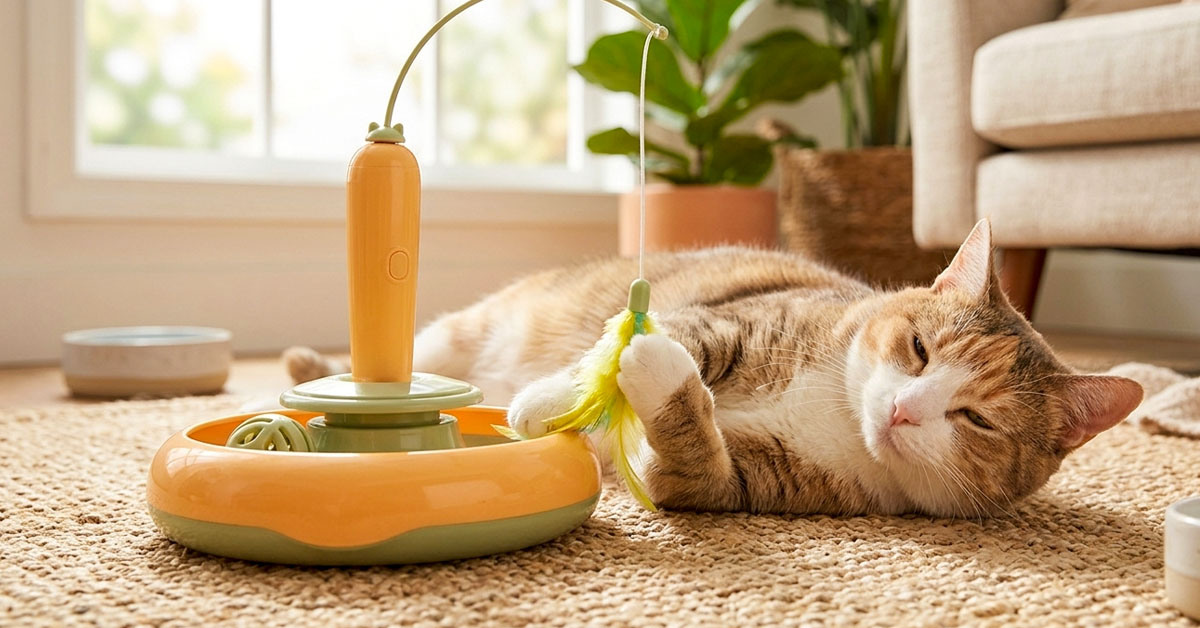
The honest answer is that not every cat will respond the same way. Some take to it immediately. Some need a few days of the toy just sitting there before they'll approach it. Cautious cats especially — the ones who hide from anything new — do better when it's introduced turned off, left in the room like just another piece of furniture, and only switched on once they've decided it's safe.
But the fundamental difference between WhirlPaw and the toys collecting dust in Margaret's drawer comes down to one thing: the movement never repeats. That's it. That's the whole reason it works when others don't. Cats are pattern-recognition machines, and the moment they decode a toy's rhythm, it's dead to them. A toy that has no fixed rhythm has no expiration date on its appeal.
The other practical details matter too — the quiet motor, the safe rounded edges, the fact that the feather can be swapped out without replacing the whole unit. But none of that matters if the cat won't play with it. The unpredictability is what gets them there. Everything else is what keeps the experience hassle-free for the owner.
A Small, Honest Thing That Made a Real Difference
Nobody's claiming a cat toy fixes everything. Cats still need vet visits, proper nutrition, and genuine one-on-one time with the people they love. But for the specific, under-discussed problem of a devoted owner whose body can't keep up with their cat's need for active play — WhirlPaw fills that gap quietly and reliably.
It's the kind of product that doesn't ask much of you. Turn it on. Walk away. Let the cat do what cats do when they finally have something worth chasing. And if you're lucky, you'll catch that butt wiggle from across the room and remember exactly why you got a cat in the first place.
Try WhirlPaw at Half the Regular Price
For first-time buyers, WhirlPaw is currently available at 50% off the regular price. There's limited availability at this price, and the offer may not last.
If your cat has been sleeping too much, scratching where they shouldn't, or just lost that spark — this is a low-risk way to see if one small change makes the difference.
👉 Tap the button below to claim the 50% discount while it's still available.
Click the link above to see if WhirlPaw is still offering a 50% off discount.