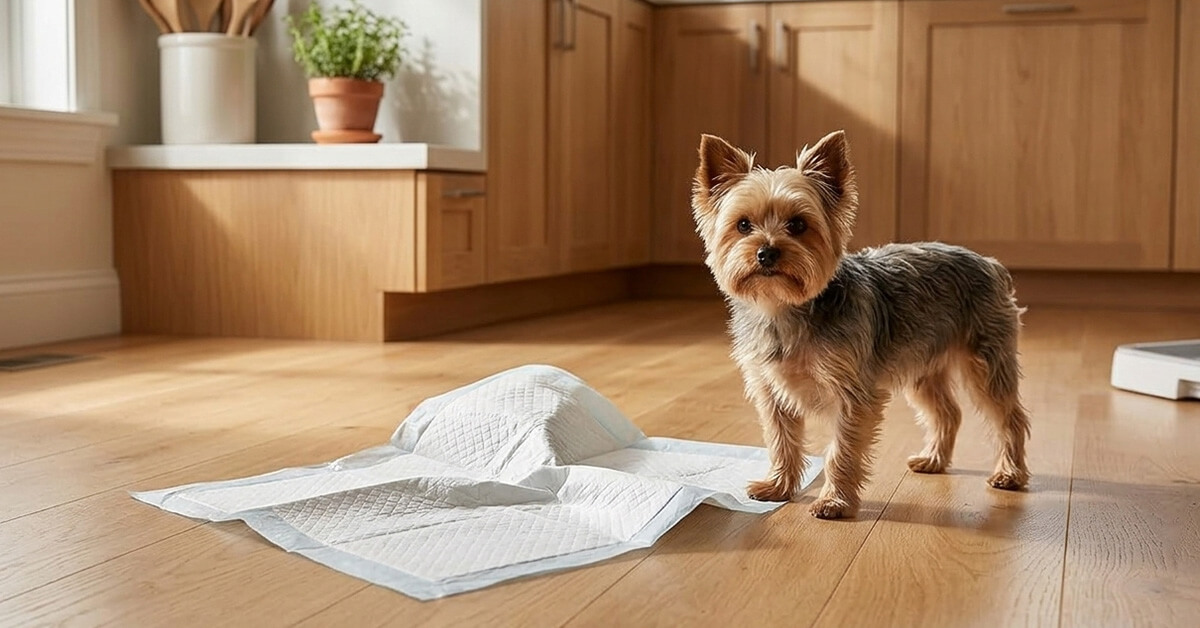
There's a moment every small-dog owner knows. You walk into the kitchen in your socks and feel it — that faint, unmistakable dampness. The pee pad moved again. Or the dog hit the edge. Or the pad folded over on itself and redirected everything onto the tile.
You grab the paper towels. You get on your knees. You wonder, for the hundredth time, why this is still happening when you bought the "extra absorbent" ones.
If this sounds familiar, you're not alone. And if you're over 60 with a small dog who does their business indoors, there's a good chance you've been fighting this exact battle for years — spending money on pad after pad, layering them two-deep, taping the corners down, and still ending up with wet floors and a faint smell you can never quite get rid of.
But something has been shifting quietly among indoor dog owners. More and more of them — especially seniors with small breeds — are walking away from pee pads entirely. Not because they've found a better brand. Because they've found a completely different system.
The Pee Pad Problem Nobody Talks About
Pee pads were never designed to be a permanent solution. They were meant for puppy training — a temporary stop on the way to going outside. But for millions of seniors, they became the everyday answer to a dog that can't wait, an owner who can't always make it to the elevator, or a rainy Tuesday when nobody wants to go out.
And for a while, they work. Sort of.
The trouble is that pads fail in slow, accumulating ways. The corners curl. The adhesive strips lose grip after the first repositioning. The dog steps on the wet spot and tracks it across the room. The absorbent layer hits its limit halfway through the day, and suddenly there's a puddle sitting on top instead of soaking in.
Then there's the smell. Even a fresh pad carries a faint chemical scent, and a used one left too long can make an entire room feel stale. For someone who takes pride in a clean home — and most seniors absolutely do — that lingering odor becomes a source of real embarrassment. Especially when the grandchildren are coming over. Especially when a neighbor drops by unannounced.
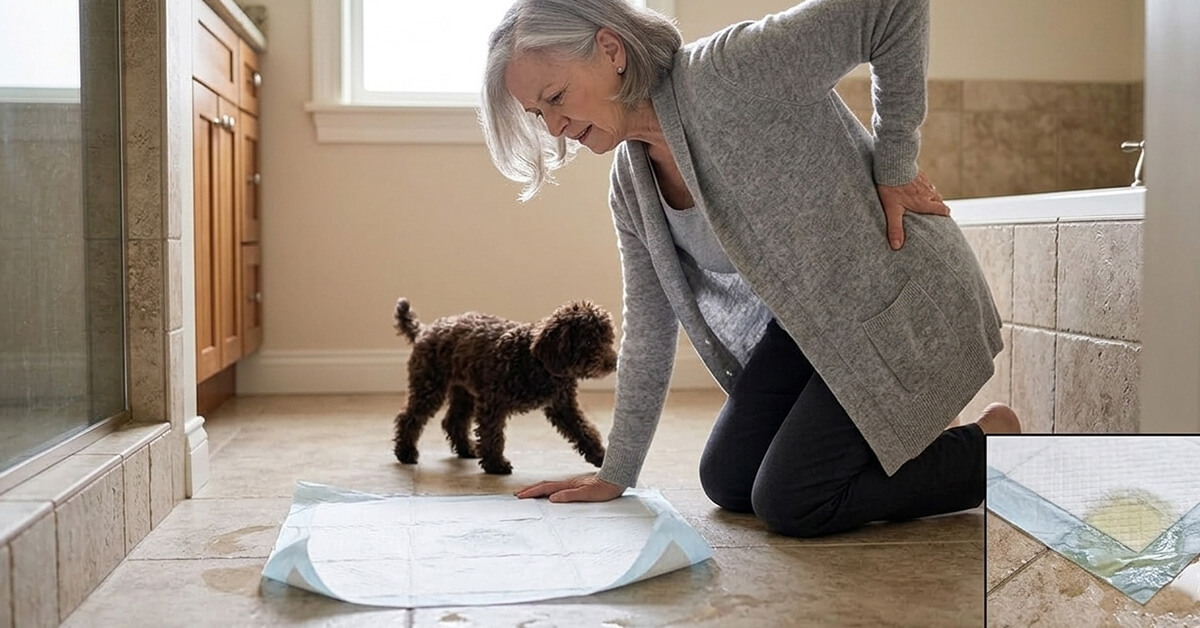
The worst part is the bending. Peeling up a soaked pad, folding it without dripping, wiping the floor underneath, laying a new one down flat and straight — it's a whole routine that demands getting low to the ground multiple times a day. For anyone with a bad back, stiff knees, or a hip that's been replaced, it's not just annoying. It's painful.
And yet most people keep buying pads because they don't know what else exists.
What's Replacing Pads — and Why It Actually Works
The shift that's happening isn't dramatic. There's no viral moment or celebrity endorsement behind it. It's just word of mouth — one dog owner telling another that they found something that finally solved the mess.
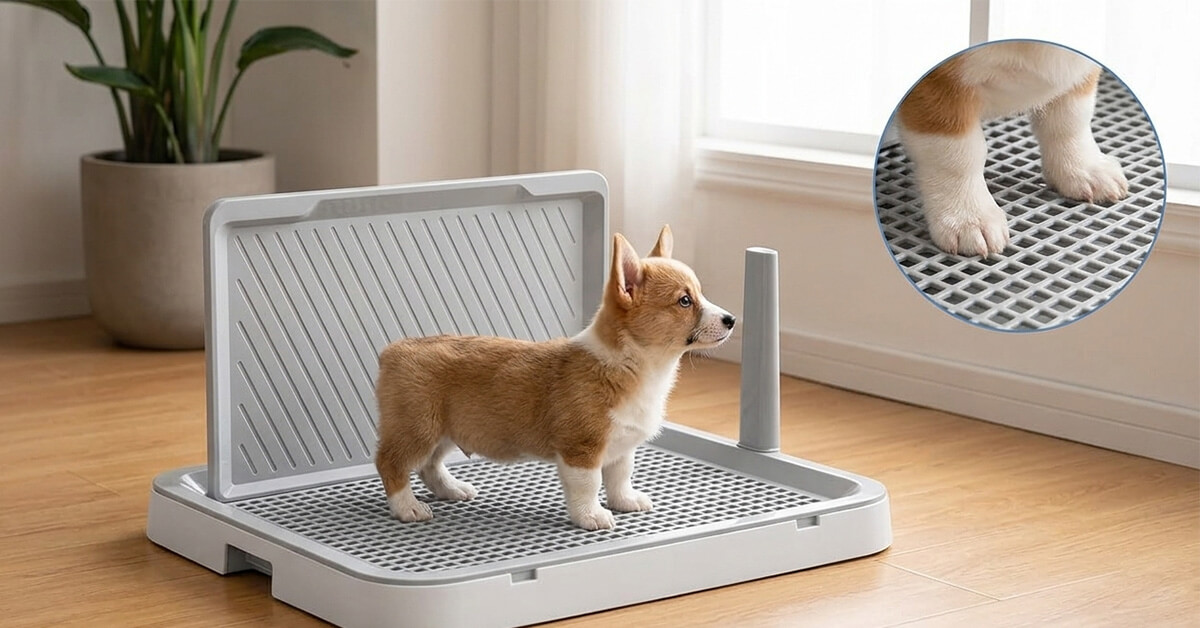
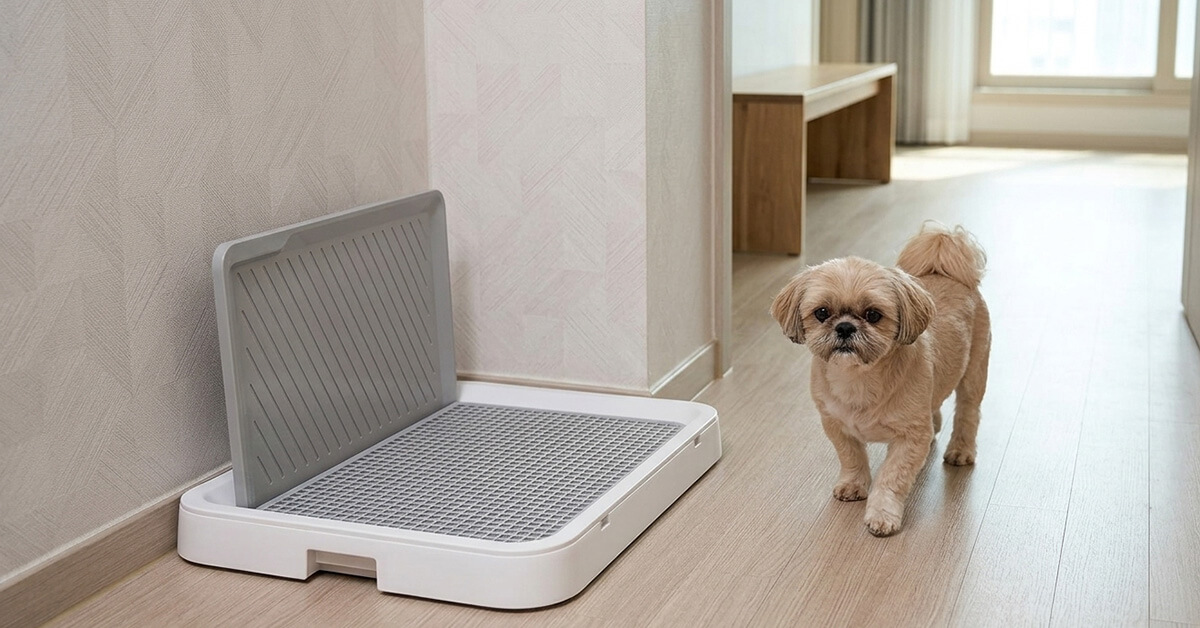
What they're switching to is a tray system with a raised grille and a built-in splash wall. The concept is simple: the dog steps onto a perforated grille that sits above a urine collection tank. Liquid passes through the grille and into the tank below. The dog's paws never touch the urine. The floor never sees a drop.
One product in particular — called the SplashGuard Pro — has been gaining traction specifically among seniors with small indoor dogs. It's not flashy. It doesn't connect to an app or require a subscription. It's just a well-thought-out tray that does exactly what pee pads were always supposed to do but never quite managed.
The splash wall stands 11 inches tall, which matters more than most people realize. Male dogs that lift their legs — even the small ones — can clear a standard pad in every direction. That stream hits the wall, the baseboard, sometimes the side of the cabinet. The tall wall catches all of it and keeps it contained inside the tray.
For female dogs and squatters, the grille is the real advantage. Instead of standing in their own puddle (which is exactly what happens on a flat pad), they stand on a dry surface while everything drains below. No wet paws tracking across the apartment. No mysterious damp spots appearing three feet from the pad.
The Part That Matters Most After 65
Talk to any senior who's made the switch and the first thing they mention isn't the splash wall or the grille. It's the cleanup.
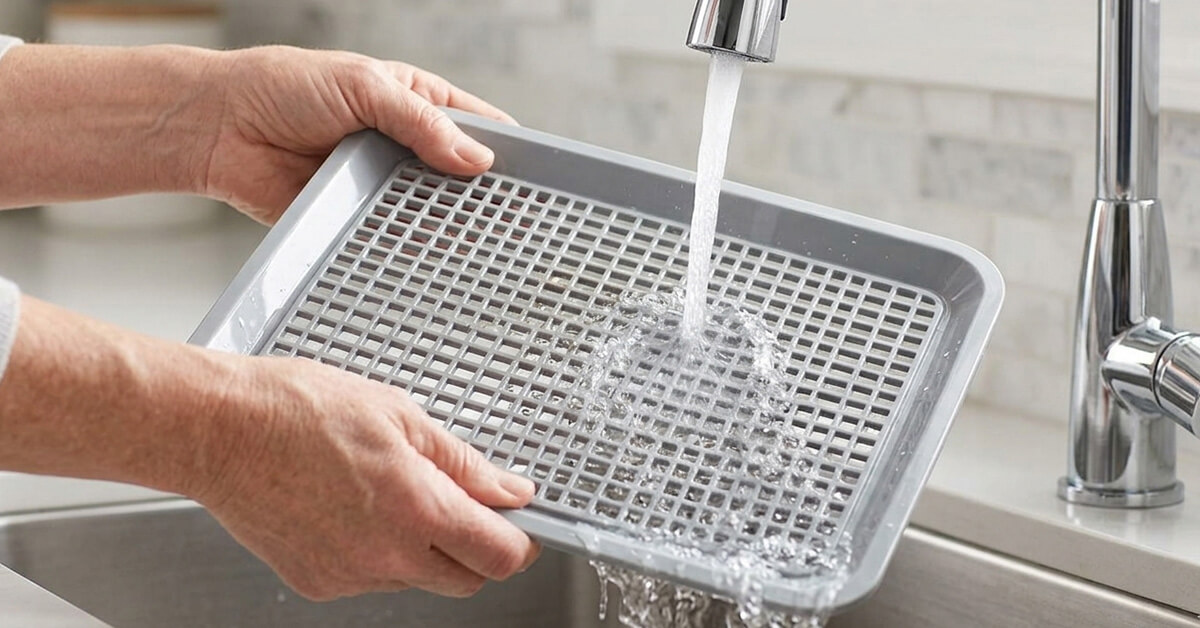
With pads, cleaning is a multi-step, floor-level chore that happens several times a day. With the tray system, it's a pull-and-rinse situation. The grille lifts straight out — no clips, no tools, no wiggling. A quick rinse under the tap and it goes right back. The urine tank slides out separately and empties into the toilet.
The whole process takes about 90 seconds and can be done standing at the bathroom sink. No kneeling. No bending over a wet floor with a roll of paper towels. No trying to fold a soggy pad without making a bigger mess.
That difference might sound small to someone in their 30s. But for a 72-year-old with arthritis in both knees, it's the difference between a manageable daily task and a dreaded one. It's the kind of practical improvement that doesn't just save time — it saves dignity.
The tank itself holds enough volume to forgive a missed cleaning. If the day gets away from you — a long phone call, an afternoon nap, a doctor's appointment that runs late — you come home to a tray that handled it quietly. No overflow. No smell creeping into the hallway. Just a tank that did its job until you got around to emptying it.
"I Thought It Was Going to Be Complicated. It Wasn't."
One of the reasons pads have stayed so popular is that they feel easy. Peel one off the stack, lay it down, done. Anything with "parts" sounds like it might require assembly instructions and a YouTube tutorial.
But the SplashGuard Pro clicks together in under a minute. The wall panel slides into the grille. The grille drops into the tray. That's it. No screws, no tools, no confusing diagrams. Taking it apart for a deeper clean is the same process in reverse.
The tray also fits standard pee pads for anyone who wants to use them underneath the grille as an extra absorption layer. The side grooves hold the pad flat, so it doesn't bunch or slide — which, ironically, makes pads work better as a backup than they ever did as the main solution.
The anti-slip base is another detail that shows someone actually thought about real-life use. Small dogs have a habit of turning toilet time into a small performance — circling, pawing, repositioning. The tray stays locked in place on the floor. It doesn't slide on tile, it doesn't skid on hardwood, and it doesn't walk itself into the middle of the room over the course of a week.
The Real Reason People Don't Go Back
The telling thing about this switch is that it almost never reverses. People who move from pads to a tray system don't go back to pads. The reason isn't loyalty to a brand or product. It's that the daily experience is just measurably better in every way that matters.
The floors stay dry. The dog's paws stay clean. The smell stays contained. The cleanup stays upright. And the quiet anxiety of wondering whether the pad held — that background hum of low-grade dread every time you walk into the room — goes away.
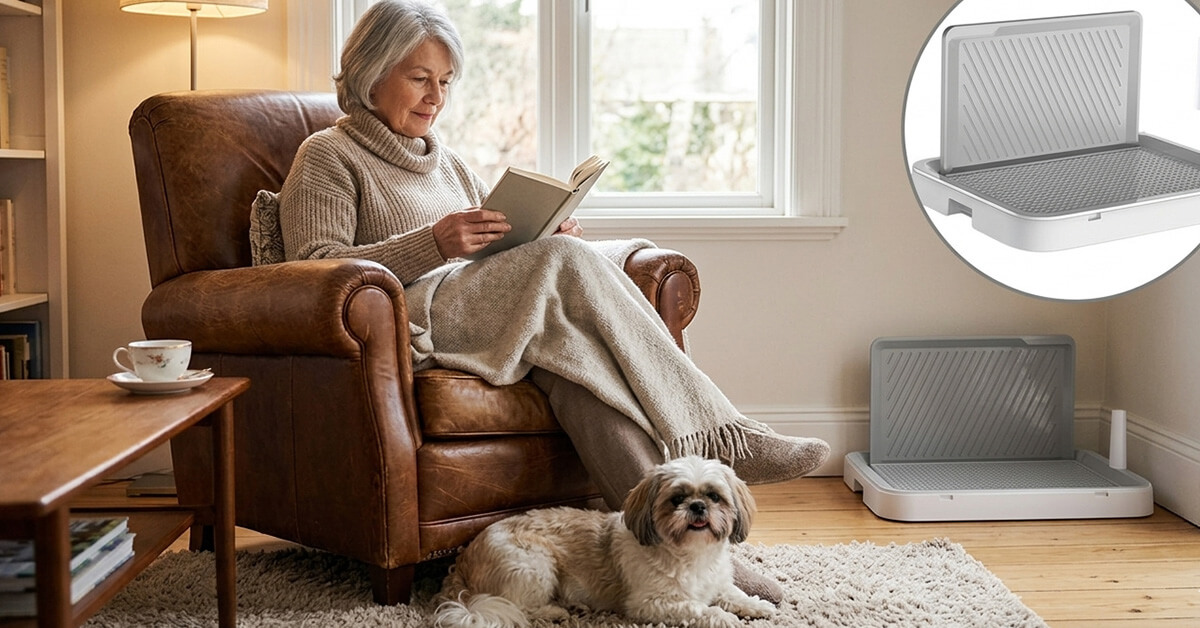
For seniors living alone with a small dog, that's not a small thing. The dog is often their closest daily companion, and anything that makes caring for that dog easier and less stressful extends something more important than convenience. It extends independence. It means one less reason to ask for help, one less reason to consider giving the dog up, one less thing that makes daily life feel harder than it needs to be.
A dry floor and a clean dog might not sound like freedom. But for a lot of people, that's exactly what it is.
Try It at Half the Regular Price
For first-time buyers, the SplashGuard Pro is currently available at 50% off. No subscriptions, no commitments — just a better system for keeping the floors clean and the dog comfortable. If pads have been a source of daily frustration, this is a chance to find out what the alternative feels like. Once the pads stop, most people wonder why they waited so long.
Click the link above to see if SplashGuard Pro is still offering a 50% off discount.