For months, breakfast meant a mop. Not coffee, not quiet — just me, on my knees, cleaning up after a dog who ate like he hadn't seen food in a week.
My golden retriever, Biscuit, had always been a fast eater. Bowls scraped clean in under ten seconds. And almost every morning, about twenty minutes after that, there it was — the retching, the mess, the whole sorry routine starting over again.
I'd tried everything. Raised bowls. Smaller portions. Scattering his food across the floor. Nothing slowed him down for long. And every time it happened, I felt that same quiet guilt — like I was failing him somehow, even though I couldn't figure out what I was doing wrong.
What I didn't know then, and what changed everything when I finally found out, is that this isn't really about greed. It's about the bowl.
The Real Reason Some Dogs Can't Stop Gulping (And Why Willpower Has Nothing to Do With It)
A dog that eats fast isn't being bad. It's being a dog — responding to a bowl that gives it absolutely no reason to slow down.
When food sits flat and open in a standard bowl, there's nothing between your dog and the bottom of it. No challenge. No engagement. Just a straight line from hungry to empty, completed as quickly as possible. The dog's instincts say eat fast, so it eats fast.
The only real fix isn't training or rationing. It's changing what the bowl asks the dog to do. Give it something to work around, something to stay engaged with, and the pace changes naturally — without any effort from you.
That's the idea behind slow-feed bowls. But not all of them actually work. Most just add ridges that a determined dog powers through in thirty seconds flat. The good ones do something different.
The Spinning Ball That Changes Everything
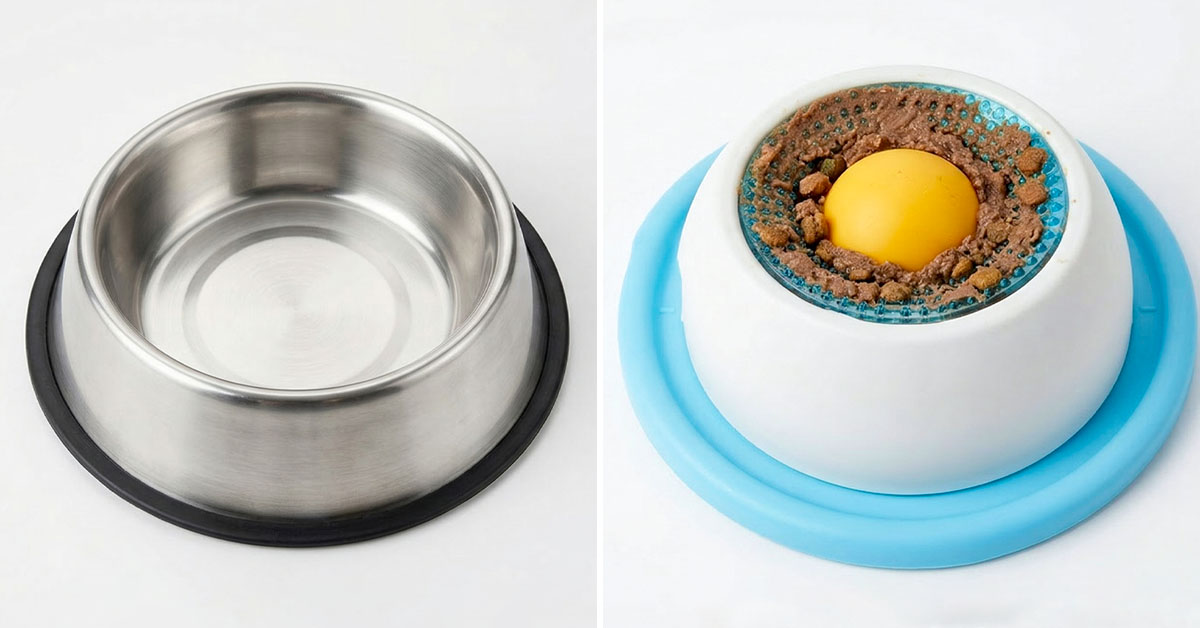
The PawSoothe Anti-Slip Spinning Lick Bowl doesn't look like a typical slow feeder. There are no mazes, no complicated shapes to fill. What it has instead is a rotating ball at the center — and that one feature changes the entire experience for the dog.
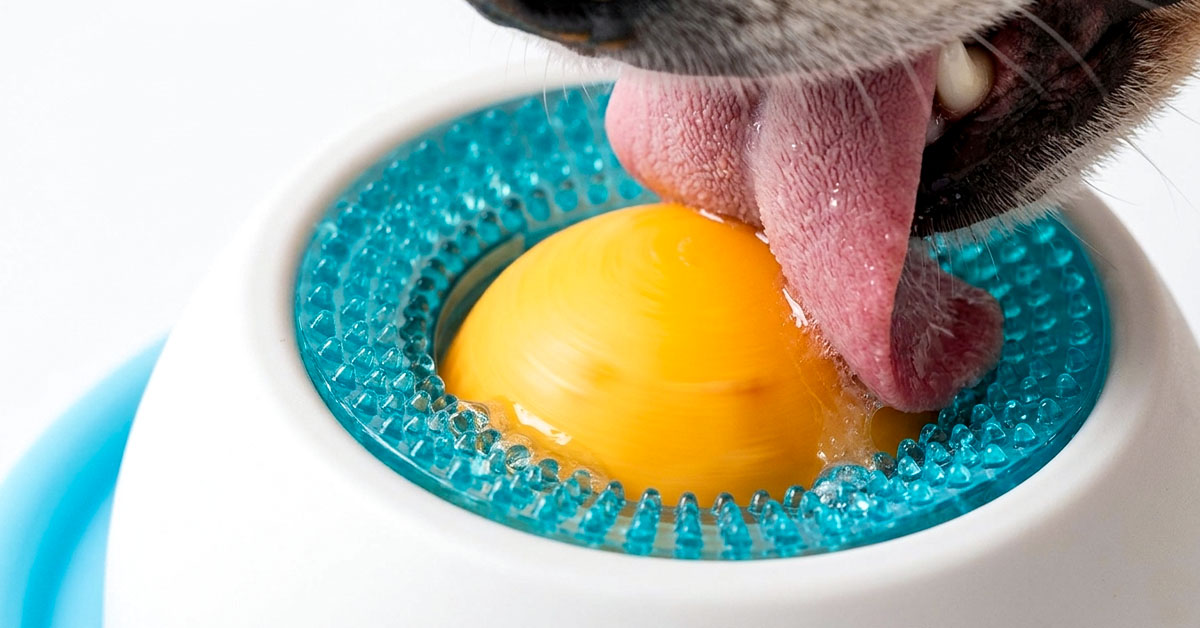
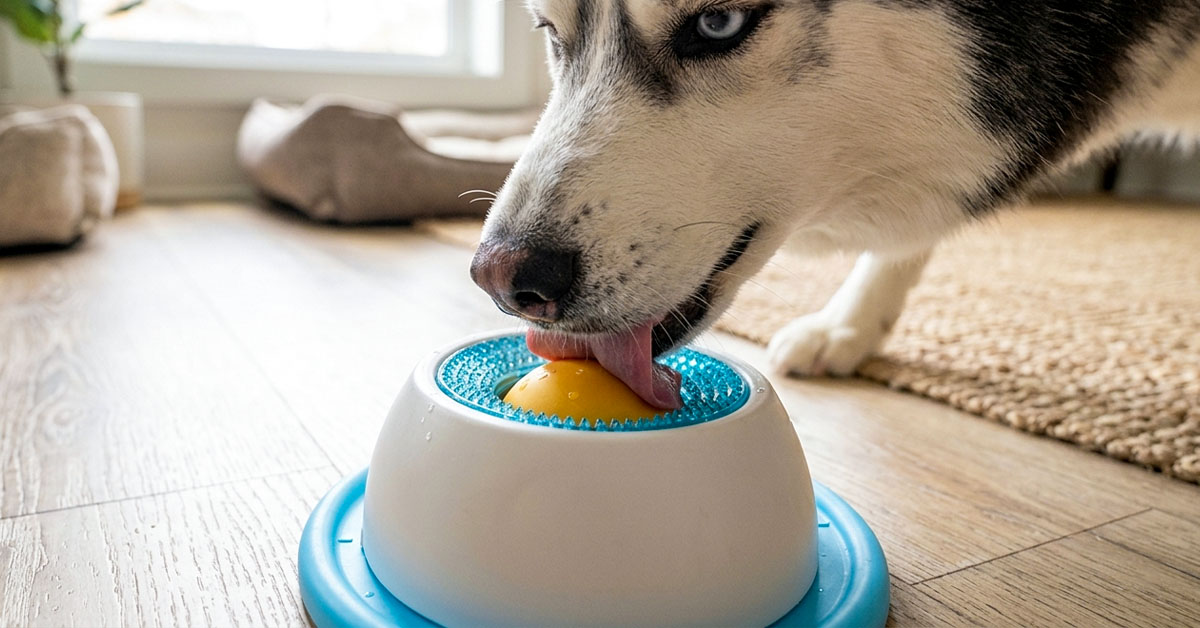
As the dog licks, the ball spins. It moves with them, follows their tongue, keeps them chasing it in a way that's genuinely engaging rather than frustrating. What looks like a toy is actually doing something very specific: it forces the dog to slow down, stay focused, and work through the food one lick at a time instead of one gulp at a time.
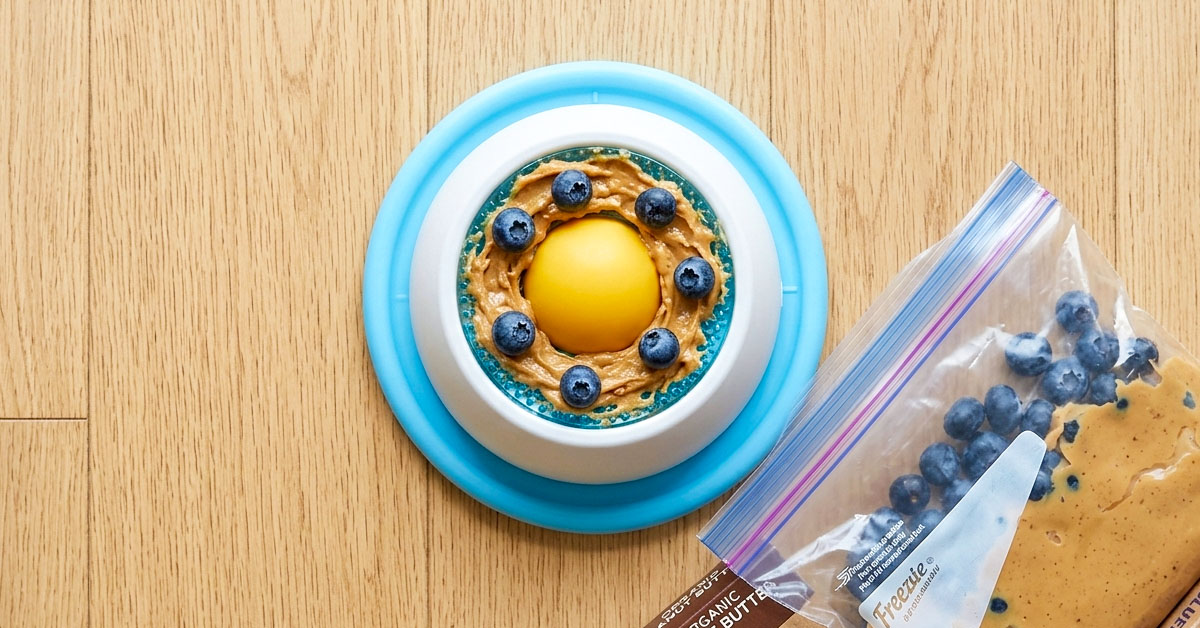
Around the ball is a ring of soft TPR nubs — that teal textured pad visible from above. It's not just there for grip or decoration. As the dog licks across it, it gently massages their tongue and picks up food residue at the same time. It's one of those quiet, thoughtful details you don't notice until you start wondering why your dog's breath seems a little better than it used to.
And underneath all of this, a non-slip ring on the base keeps the whole bowl locked to the floor. No chasing it across the kitchen. No clattering. Just a dog locked in, working the bowl, taking their time without knowing that's exactly what they're doing.
What Actually Happened When Biscuit Tried It
The first morning I used it, I stood there watching and genuinely couldn't believe what I was seeing.
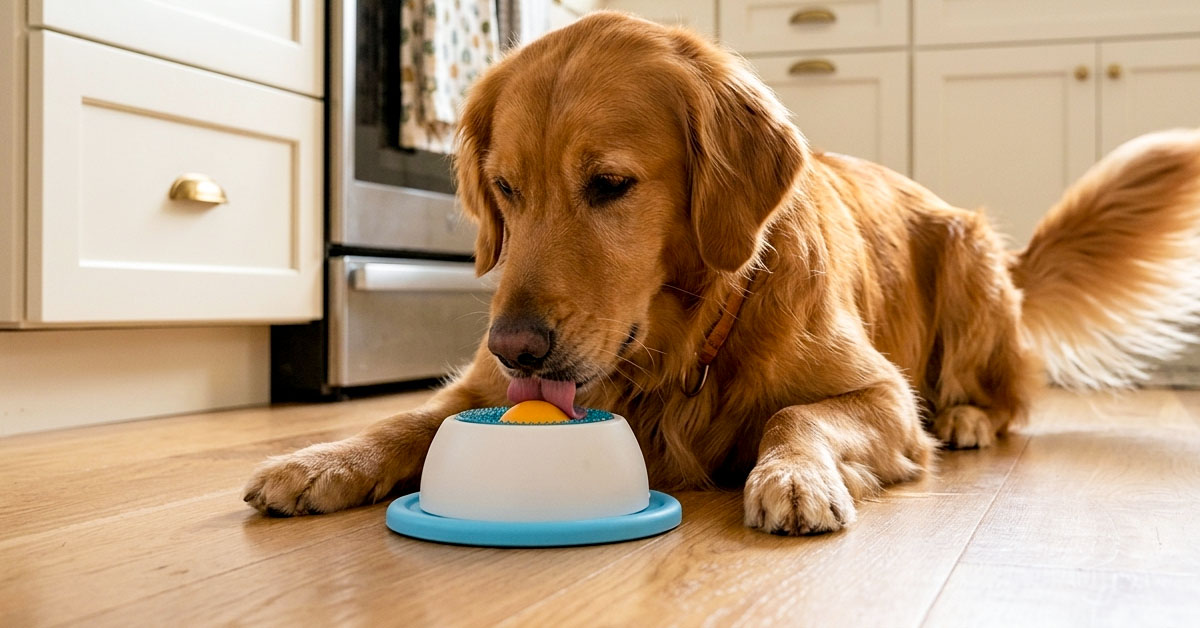
Biscuit approached it the same way he approaches everything — nose first, full speed. But the moment he started licking, something shifted. The ball moved. He paused, refocused, licked again. It moved again. He was hooked.
What normally took eight seconds took almost ten minutes. He wasn't frustrated — he was focused. Ears forward, tail doing a slow, happy wag, completely absorbed in something that was, for the first time, actually interesting to him.
I waited for the aftermath. Stood near the kitchen, half-expecting the usual. Nothing happened. He drank some water, did a lap of the garden, and lay down in his usual spot like nothing was different — except that, for the first time in months, nothing was.
That was over two weeks ago. The mop has stayed in the cupboard every single morning since.
Not Just for Dogs Who Vomit
The fast-eating problem gets attention because vomiting is hard to ignore. But it's worth knowing what's happening underneath, even in dogs who seem fine.
When a dog eats too quickly, they swallow large amounts of air along with their food. That trapped air builds pressure in the stomach — a condition called gastric dilatation that, in larger breeds especially, can escalate into something genuinely dangerous. Vomiting is the visible symptom. Bloating is the quieter one.
Slower eating reduces both. It also reduces the post-meal pacing, the restlessness, the way some dogs seem agitated rather than satisfied after they eat. When digestion actually has time to work the way it's supposed to, the dog settles differently — calmer, more content, visibly more comfortable.
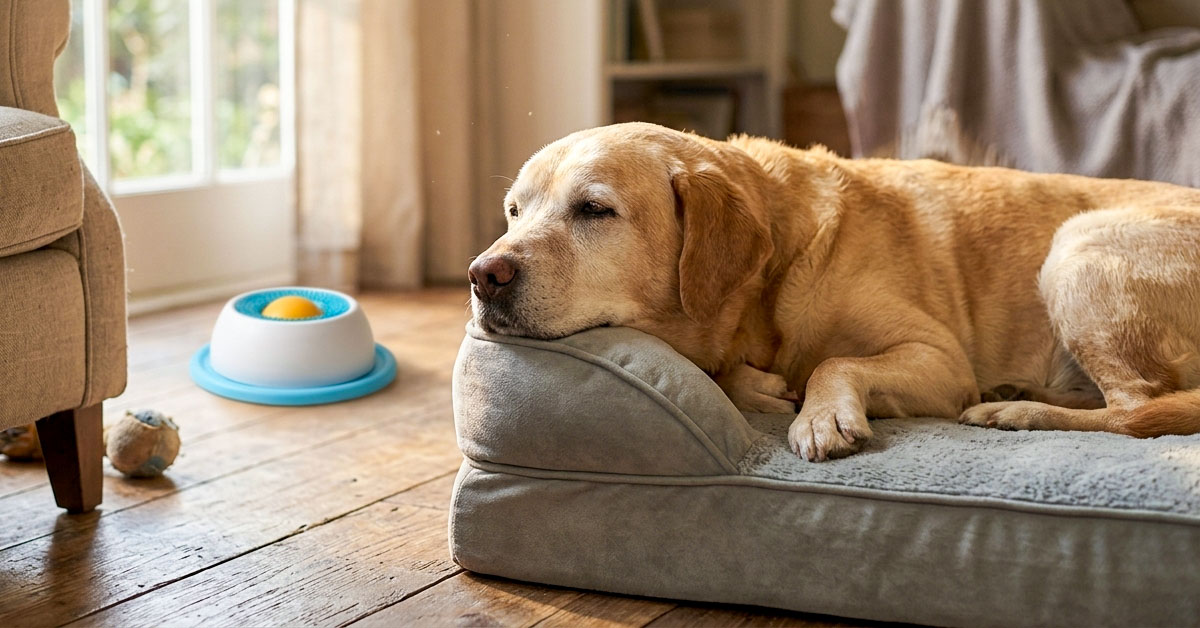
For older dogs in particular, that matters more than it might seem. Their digestive systems are less forgiving. What a young dog tolerates without consequence can become a real problem at eight, ten, twelve years old. Getting ahead of it now is much easier than managing it later.
The Freezer Trick That Buys You 20 Minutes of Pure Quiet
One thing worth knowing: this bowl works even better frozen.
Load the grooves with wet food, peanut butter, plain yogurt, or mashed banana. Set it in the freezer for a couple of hours. What comes out is a slow-lick puzzle that can genuinely occupy a dog for fifteen to twenty minutes straight.
It's become a regular tool for moments that used to feel impossible — nail trimming, phone calls, the afternoon stretch when the dog is restless and you're not. Put down the frozen bowl, step back, done.
The PP material handles freezing without cracking, and cleanup is still easy — a rinse under warm water, a soft brush for the nubs if needed, and it's ready to go again. No soaking, no lingering smells, no wondering whether you actually got it clean.
It Works for Cats Too — With a Small Trick
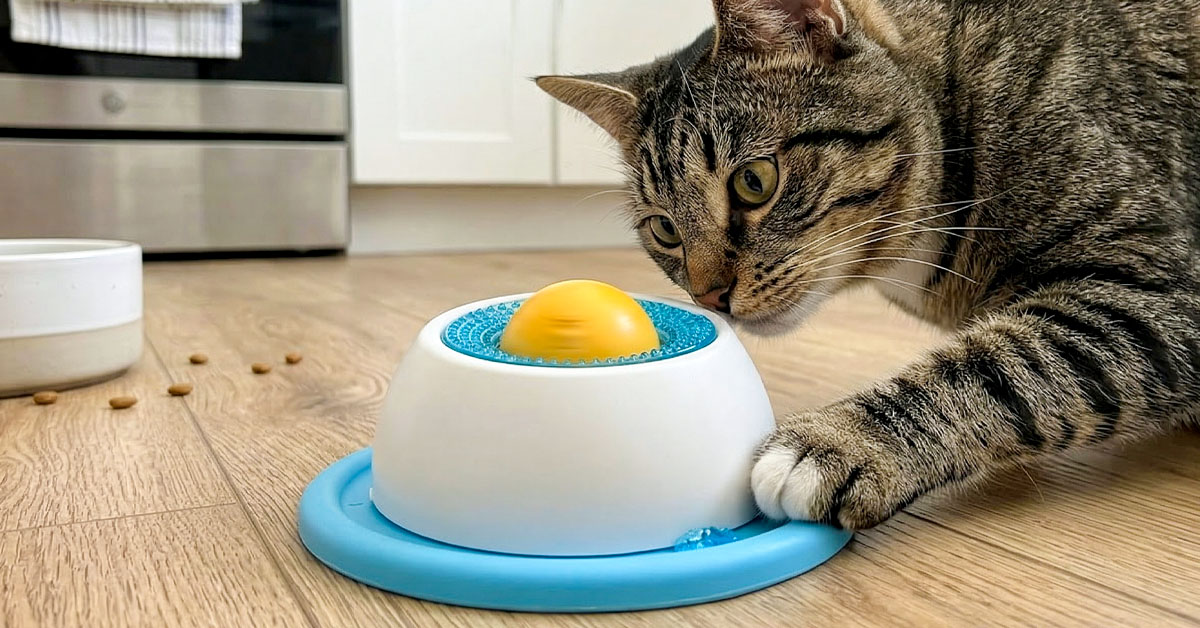
The bowl comes in a cat version as well, and while cats are famously harder to win over, the approach is simpler than it sounds.
The key is the first introduction. Don't start with their regular food. Start with something they already love — tuna water, a dab of their favorite wet food, anything that reliably gets their attention. Put it right on the textured pad where it's easy to find.
Most picky cats need just that first successful lick to get curious about the spinning ball. Once they realize food reliably comes out of it, the novelty does the rest. The same principles apply — slowed eating, less air swallowed, better digestion — just at a more characteristically unhurried cat pace.
What to Know Before You Get One
A few things worth mentioning before trying it:
The bowl is designed for licking, not chewing. If a dog tends to bite or gnaw at toys rather than lick them, supervise the first few sessions to see how they interact with it. For dedicated lickers, the rotating mechanism is built to handle enthusiastic use without breaking or coming loose.
For very large breeds or dogs with extra-wide muzzles, it's worth checking the sizing before ordering. The standard version suits most medium and large dogs comfortably.
And if the dog has never used a slow feeder before, the first session or two might end with some confused sniffing and walking away. That's normal. The novelty of the spinning ball usually wins them over within a day or two — especially once they've made the connection between licking and food appearing.
This Is One of Those Fixes That Makes You Wonder Why You Waited
There's a particular kind of frustration that comes from watching a problem repeat every single day and not being able to stop it. The mess, the guilt, the sense that something is wrong but not knowing what to actually do about it.
This is one of those rare situations where the fix turns out to be genuinely simple — not a supplement, not a training program, not a vet intervention. Just a bowl that gives the dog something to stay engaged with, and lets physics and instinct do the rest.
Biscuit still gets excited at mealtimes. That hasn't changed. What's changed is that the excitement now lasts ten minutes instead of eight seconds, and breakfast ends with a satisfied dog instead of a mess on the floor.
The mop is still in the cupboard. That's all I needed to know.
Try It for 50% Off — First-Time Buyers Only
Right now, PawSoothe is offering 50% off for first-time buyers — but this pricing won't last. Stock is limited and this offer can come down at any time.
If your dog eats too fast, seems unsettled after meals, or you're just ready for mornings that don't involve cleanup — this is the simplest change you can make today.
Click the link above to see if PawSoothe is still offering a 50% off discount.