There's a moment most dog owners know but rarely talk about.
You get up from the couch to grab a glass of water. Before you're halfway to the kitchen, you hear the click of nails on the floor behind you. You glance back, and there they are — right at your heels, watching your every move like you might disappear forever.
It's sweet at first. Flattering, even. "My dog just loves me that much."
But then it happens every time. Every room. Every trip to the bathroom. Every time you stand up for any reason at all. And somewhere between endearing and exhausting, a quieter thought creeps in:
Is something wrong with my dog?
The answer, according to animal behaviorists, is more nuanced than most people expect — and it has very little to do with love.
The Sigh on the Floor That Most People Misread
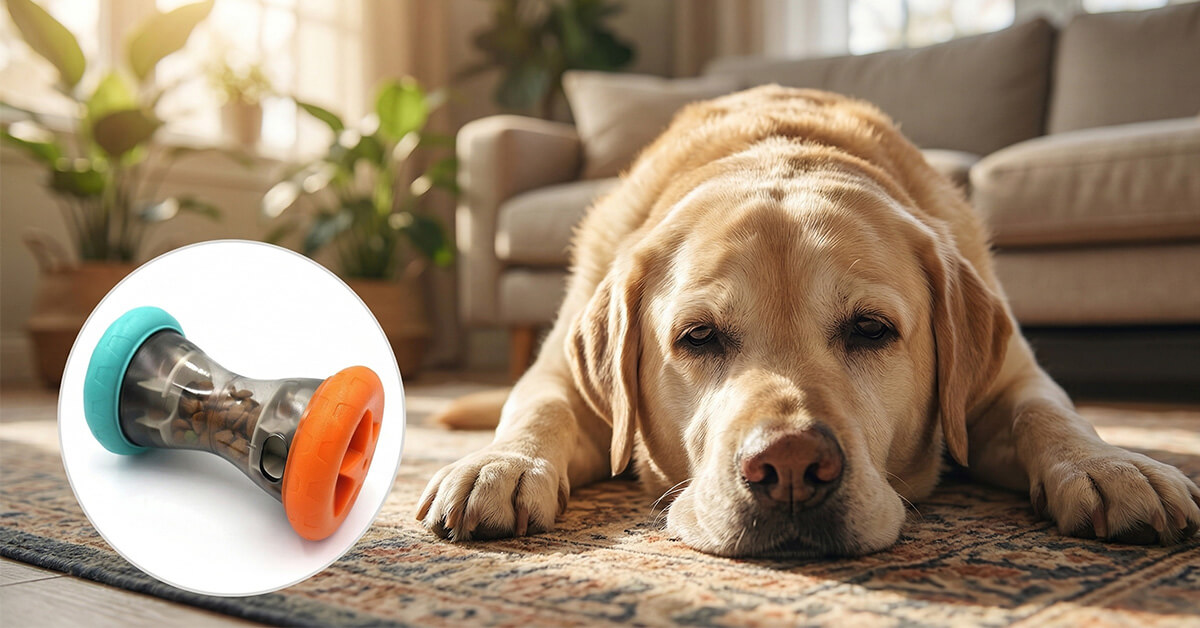
Picture this. It's two in the afternoon. The house is quiet. Your dog is lying at your feet, chin flat on the ground, eyes half-open. Every few minutes, they let out a long, heavy sigh.
Most people see that and think their dog is relaxed. Content. Just hanging out.
But behaviorists say that sigh often means the opposite. It's not contentment — it's resignation. The dog has nothing to do, nowhere to direct their energy, and no problem to solve. So they just... exist. And the only stimulation left in their world is tracking where their human goes next.
Dogs were never built for this kind of life. Their brains evolved to sniff out food, track prey, navigate complex terrain, and solve problems on the fly. A pet dog living in a quiet home — especially with a retired owner who follows a calm, predictable routine — often has a brain that's running on empty.
That following behavior? It's not obsession. It's a dog whose mental gas tank is bone dry, and who has literally nothing better to do than shadow the one interesting thing in the house.
Why Most Dog Toys Miss the Point Entirely
Here's where well-meaning dog owners usually go wrong.
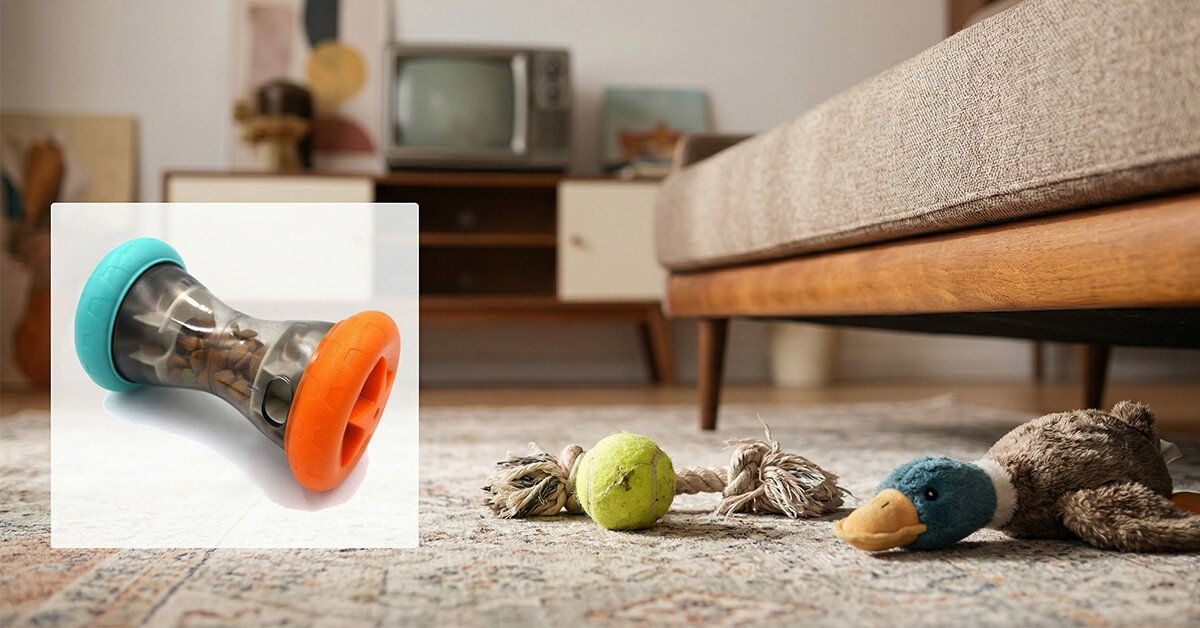
They see the clinginess, the restlessness, the boredom — and they go buy a toy. A squeaky ball. A rope. A stuffed animal shaped like a duck. The dog plays with it for three minutes, maybe five, and then it ends up under the couch with the other seven toys collecting dust.
The problem isn't that the dog doesn't like toys. The problem is that most toys don't ask anything of the dog's brain.
A tennis ball is fun for about four throws. A squeaky toy is interesting until the squeak is predictable. A plush toy has zero challenge. None of these things tap into what a dog's brain actually craves — the sniff-track-solve-reward loop that nature hardwired into them over thousands of years.
It's the difference between handing someone a magazine they've already read and giving them a crossword puzzle they haven't seen before. One kills time. The other actually engages the mind.
And for a dog that follows you from room to room with nothing else to focus on, that distinction matters more than most people realize.
The Brain Exercise That Tires Them Out Without a Single Step
There's a concept in dog behavior circles called "mental enrichment" — and for years it was mostly talked about by trainers and veterinary behaviorists. But lately, it's been making its way into mainstream pet care, and for good reason.
The idea is simple: a dog that uses its nose and brain to solve a problem burns just as much energy as one that runs around a yard. Sometimes more.
Think about it from a human perspective. An hour of focused problem-solving — doing taxes, assembling furniture, learning something new — can leave a person more drained than an hour-long walk. The brain is an energy-hungry organ, and when it's actually working hard, the whole body feels it afterward.
Dogs are no different. When they're given a task that requires sniffing, nudging, figuring out cause and effect — their brains light up in ways that physical exercise alone can't replicate. And the result is a dog that lies down afterward not out of boredom, but out of genuine satisfaction.
This is where a specific type of enrichment tool has been quietly gaining popularity among senior dog owners — not a chew toy, not a ball, but a treat-dispensing puzzle that rolls.
How a Rolling Puzzle Feeder Changes the Daily Routine
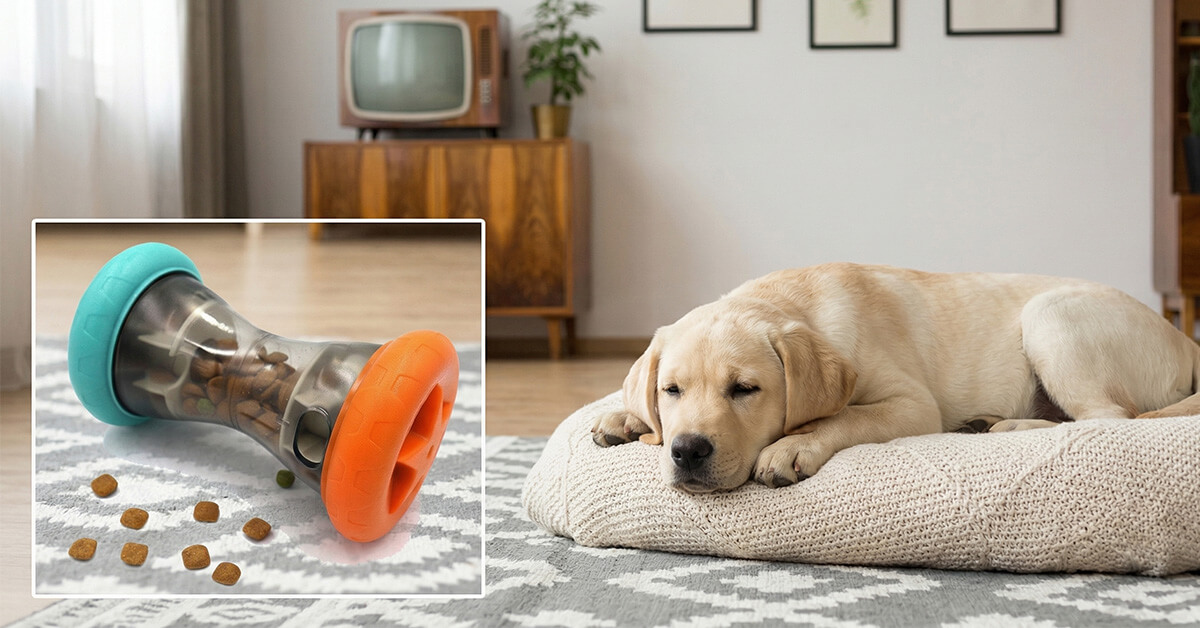
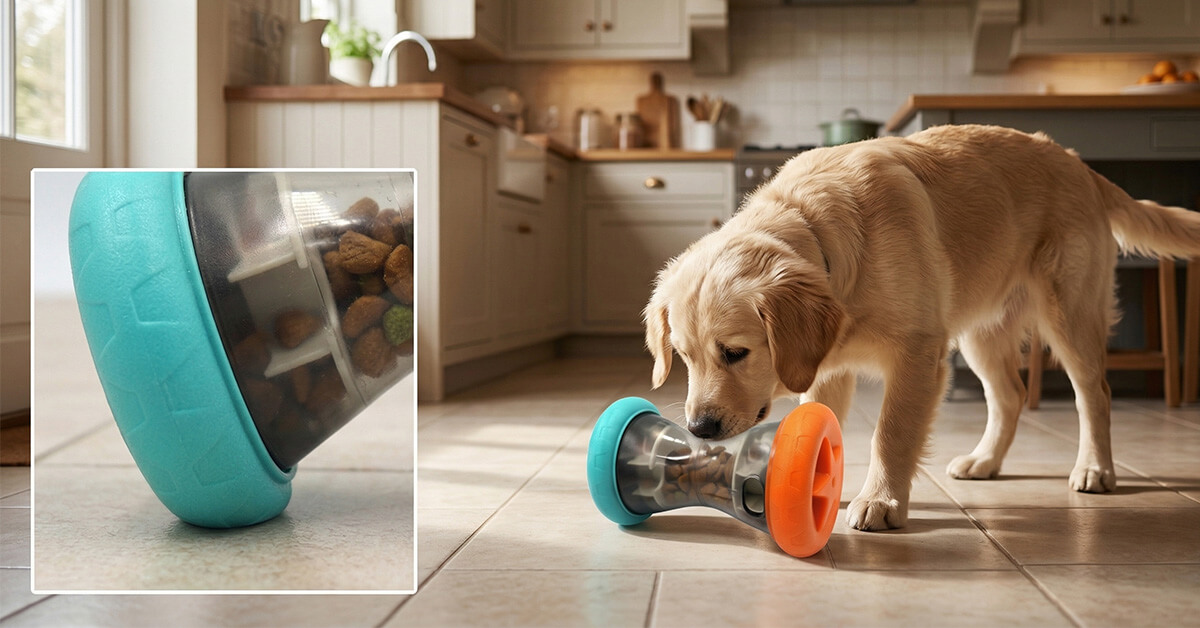
The concept behind the PawPuzzle Treat-Dispensing Slow Feeder is deceptively simple. It's shaped like a dumbbell with a transparent chamber in the middle. You load it with kibble or small treats, set it on the floor, and let the dog figure out the rest.
What happens next is where things get interesting.
The dog sniffs. Detects food inside. Nudges it with their nose. It rolls. A treat falls out. The dog's brain immediately connects the action to the reward — and the hunt begins.
From that point on, the dog is locked in. Nosing it across the floor. Pawing at it from different angles. Tracking where the treats land. Adjusting their approach when the easy ones are gone and the last few pieces rattle around inside.
It's not frantic play. It's focused, self-directed problem-solving — the exact kind of mental engagement that behaviorists say most pet dogs are starving for.
And the whole thing plays out in about ten to fifteen minutes. No setup required. No training. No need for the owner to get up, throw anything, or supervise. Just load it and let the dog's instincts take over.
For someone with limited mobility, bad knees, or a recovery that makes long walks difficult — it's the kind of solution that changes the shape of the day without demanding anything physical.
The Part Nobody Expects — Quiet
One of the first things people notice isn't the dog's behavior. It's the silence.
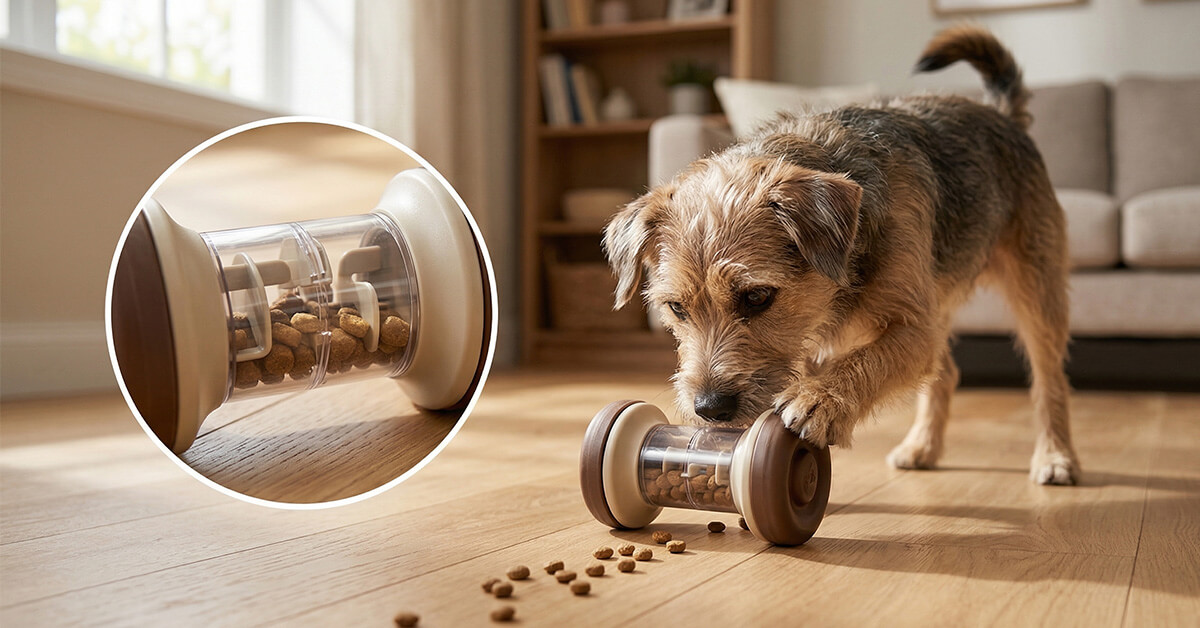
Most treat toys are made of hard plastic. They clatter across tile floors, bounce off baseboards, and turn a peaceful living room into a percussion concert. For anyone who values a calm home — and especially for someone whose dog tends to play during early morning or late evening hours — the noise is a dealbreaker.
The PawPuzzle is built differently. Soft rubber wheels on both ends absorb the impact as it rolls, which means it moves across hardwood and tile without the scraping, banging, and rattling that makes most rolling toys unbearable indoors.
It sounds like a small thing. But for a senior living in a condo, an apartment, or a home with a partner who's napping in the next room — that quiet makes the difference between a product that gets used every day and one that gets shoved in a drawer after the first try.
What Happens After a Week
The shift usually starts within the first few days.
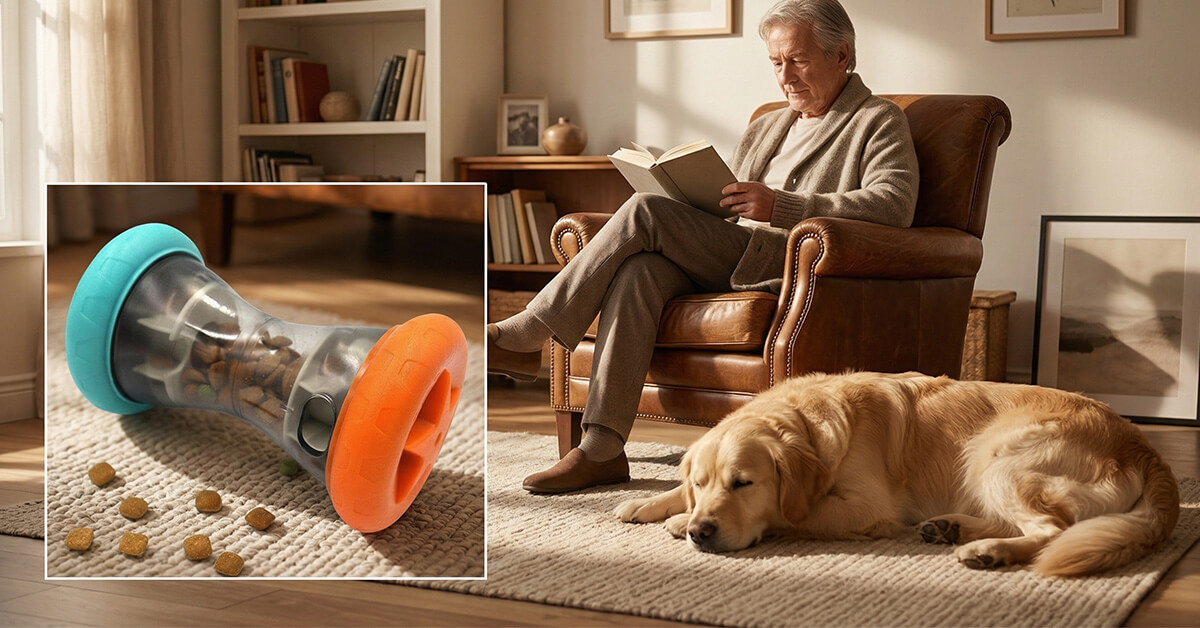
The dog still follows their owner around — that's a bond, and it doesn't disappear. But the character of it changes. The pacing slows down. The whining at the bathroom door eases. The frantic need to be within three feet at all times softens into something calmer.
Because the dog now has a daily outlet. Something to anticipate, engage with, and feel accomplished about. That mental itch that was driving the clingy, anxious behavior? It's being scratched.
Some owners start using it as a mealtime replacement — loading breakfast into the puzzle instead of a bowl. Others use it as a pre-departure ritual, giving the dog something to focus on right before heading out the door. Either way, the routine builds, and the dog starts to settle into a more relaxed version of themselves.
It's not a miracle cure. It's not going to fix deep-rooted anxiety or replace professional training for serious behavioral issues. But for the everyday restlessness, boredom, and shadowing that most senior dog owners quietly deal with — it fills a gap that nothing else in the toy aisle does.
It Pulls Apart in Seconds — Because Nobody Wants Another Thing to Scrub
One more thing worth mentioning, because it's the kind of detail that separates something people actually use from something they abandon.
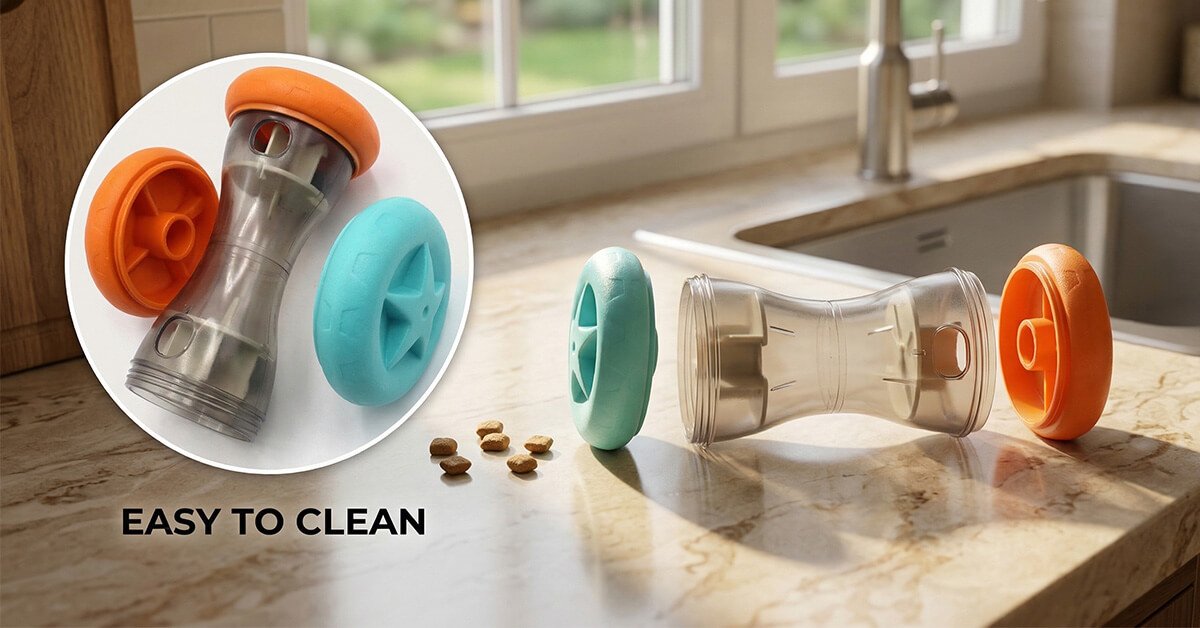
The PawPuzzle disassembles into separate pieces. No tools. No twisting mechanisms that get jammed with dried kibble dust. Just pull the ends off, rinse each part under warm water, and let it dry.
For daily use — which is how most people end up using it — a quick rinse after each session is all it takes. For deeper cleans after sticky treats or wet food, a bottle brush handles the inner chamber easily.
It's a small design choice, but it matters. Because the number one reason enrichment tools end up in the back of a closet isn't that the dog lost interest — it's that the owner got tired of the cleanup.
A Smarter Way to Feed. A Calmer Way to Live.
Right now, the PawPuzzle Treat-Dispensing Slow Feeder is available at half off the regular price for first-time buyers. No code needed — the discount is applied automatically at checkout.
It's a limited-time offer, and once it's gone, the price goes back to full.
For anyone who's been watching their dog pace, cling, and sigh through another quiet afternoon — this is the simplest change that makes the biggest difference. Not more walks. Not more toys. Just the right kind of mental challenge, delivered in a way that fits into daily life without adding a single chore.
The dog gets a purpose. The owner gets peace. And the couch finally gets a break.
Click the link above to see if PawPuzzle is still offering a 50% off discount.